





3-in-1 bathroom heater comparison: heat lamps, infrared and slimline units
Author: By Joel Grainger Date Posted:30 September 2026
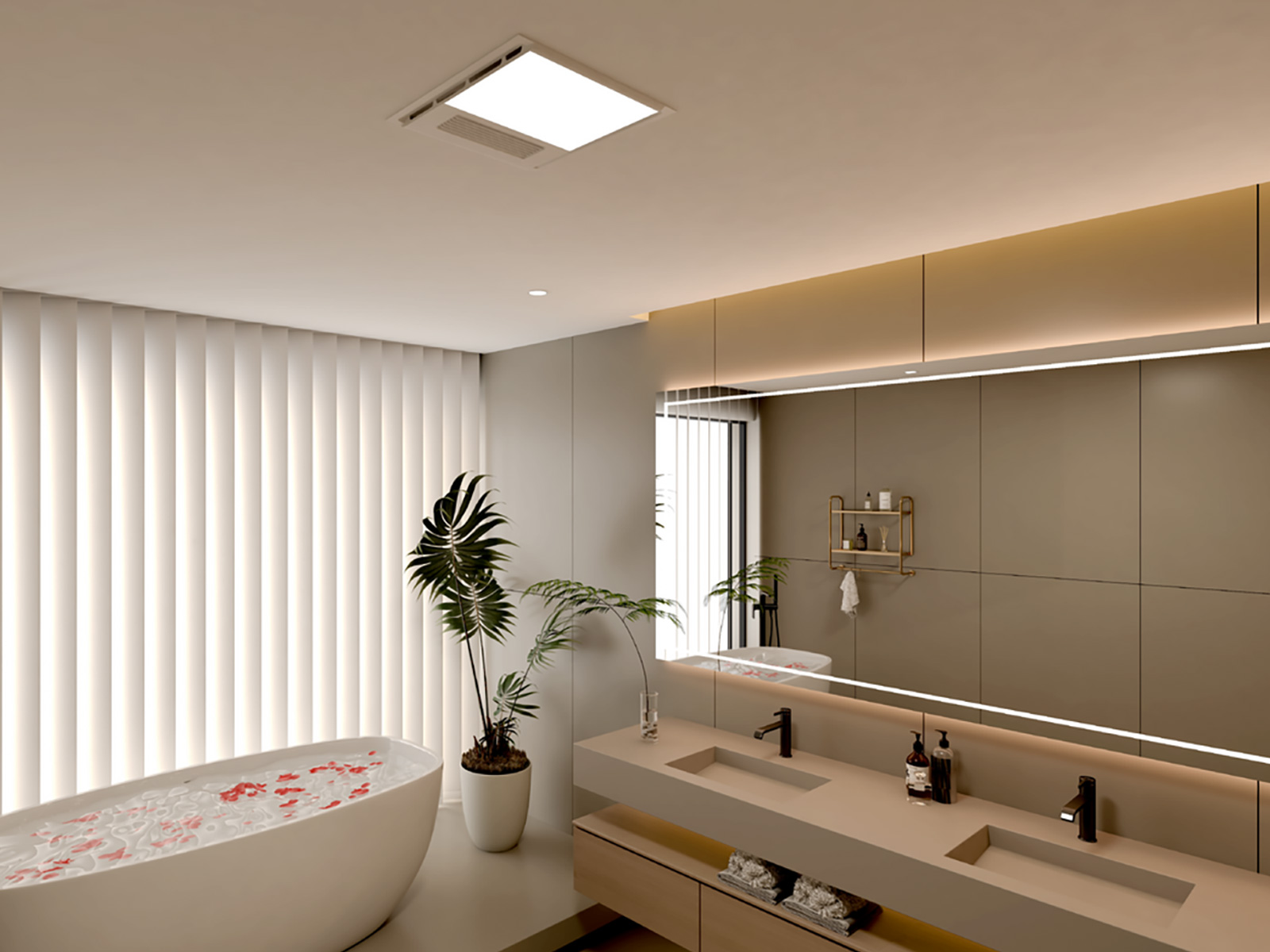
Choosing a bathroom heater is easier once you know how you want the warmth to feel. Traditional heat-lamp units suit people who want simple, direct heat and replaceable lamps. A linear infrared unit gives you fast radiant warmth from a tube or carbon element. Slimline units keep the ceiling fascia neater, but the heating method inside can be radiant or fan-forced.
If you also need an exhaust fan and everyday lighting, a combination unit can put all three functions into one ceiling fitting. Just remember that the heater and exhaust fan do different jobs. The heater keeps you comfortable; the fan removes moisture.
Heat lamps, infrared or slimline: what's the difference?
| Type | Heating method | How the warmth feels | Room suitability | Ceiling space required | Ventilation | Lighting | Controls | Installation considerations |
|---|---|---|---|---|---|---|---|---|
| Traditional heat-lamp combination | Replaceable infrared heat lamps, often two or four | Fast, direct warmth beneath the lamps | Useful when you want targeted heat as soon as you step out of the shower. The installer still needs to size the unit for the room. | Depends on the model. Our Buller 4 example needs a minimum 250mm ceiling depth. | Usually built in on a 3-in-1 unit | Usually a separate LED or centre lamp | Wall switches for heat, light and fan | Check the cutout, lamp clearances, insulation restrictions, duct route and outside outlet. |
| Linear infrared combination | A single infrared tube rather than several heat-lamp globes | Fast radiant warmth directed into the room | Worth considering when you want a low-profile, linear fitting and strong extraction in one unit | Model-specific. The St Moritz needs 220mm minimum ceiling depth. | Built in on the St Moritz 3-in-1 | Integrated tri-colour LED | Separate wall controls are supplied | The long rectangular cutout may not suit an existing square opening. |
| Slimline or flush-style combination | Not one heating technology. It may use carbon radiant elements or fan-forced PTC heating. | Carbon elements give radiant warmth. A PTC unit blows warmed air into the room. | Useful when the appearance of the fascia matters, or when a renovation calls for a flush-style retrofit option | Check the actual model. The examples below need 200mm to 220mm minimum installation depth or clearance. | Usually built in, but confirm airflow and duct size | Usually an integrated LED panel | Wall plate, digital controller or optional remote, depending on the model | "Slimline" describes the visible profile, not a universal cutout or heating method. Measure before buying. |
| Standalone infrared heater | Infrared tube or element with no fan or light | Direct radiant warmth | Handy when you already have suitable lighting and ventilation | The Infraglow example needs 240mm minimum ceiling depth. | Separate exhaust fan required | Separate bathroom lighting required | Wall switch supplied with the Infraglow | Plan the heater, fan and light positions together so each product can be installed in a suitable location. |
There is some overlap between these labels. Traditional bathroom heat lamps are also a form of infrared heating. In shops, "infrared" often refers to a linear tube or carbon element, while "heat lamp" usually means the familiar replaceable lamp globes. "Slimline" only tells you about the shape and profile, so check what is doing the heating inside.
Current options from Alstra's range
Prices and availability checked 10 September 2026. Prices are in Australian dollars and can change. Installation, extra accessories and delivery may cost more. Check the product page before ordering.
| Product | Heat | Exhaust | Light | Cutout and ceiling space | Duct and controls | Warranty summary | Alstra price and stock |
|---|---|---|---|---|---|---|---|
| Atom Buller 4 Light 3-in-1, 12696 | 4 x 275W E27 infrared heat lamps | 305m³/h; 42dB published noise | 10W tri-colour LED; 880/1000/900lm at 3000/4000/5000K | 320 x 320mm cutout; 250mm minimum ceiling depth; 360 x 360 x 209mm product | 125mm outlet; wall switches, 1.5m duct and grille included | 3 years in-home or 2500 operating hours, whichever comes first | $195; in stock |
| Atom St Moritz 3-in-1, 16773 | 1000W linear infrared heat source | 500m³/h; 45dB published noise | 20W tri-colour LED; 1585/1700/1585lm at 3000/4000/5000K | 325 x 470mm cutout; 220mm minimum ceiling depth; 500 x 350 x 210mm product | 150mm outlet; wall switches, 1.5m duct and grille included | 3 years in-home or 2500 operating hours, whichever comes first | $389; in stock |
| Ventair Airbus 3-in-1, PVP31HLXWH | 2 x 600W carbon filament radiant elements | 330m³/h; 45dB(A) published noise | 18W LED panel; 1512lm; 4200K | 505 x 330mm cutout; 220mm minimum installation depth; 530 x 360mm fascia | 150mm outlet; 4-switch wall plate included; optional remote and timer accessories | 5 years: 2 years in-home plus 3 years motor replacement | $791.60; in stock |
| Domus Heatcore 4-in-1 retrofit, 56024 | 2150W PTC fan-forced heat; 2250W total power | 300m³/h; ≤46dB published noise; separate circulation mode | 12W tri-colour LED; 850/950/900lm at 3000/4000/5000K | 330 x 350mm cutout; 200mm minimum height clearance; 390 x 390 x 158mm product | 100mm duct; digital wall controller, 3m duct and exterior grille included | 5 years in-home, subject to manufacturer terms | $169; in stock |
| Atom Infraglow standalone heater, 14839 | 1000W round infrared heat tube | No exhaust fan included | No light included | 266mm round cutout; 240mm minimum ceiling depth; 280mm diameter x 137mm high | Wall switch included; ventilation must be planned separately | 3 years in-home domestic warranty | $265; in stock |
Traditional heat-lamp units
A heat-lamp combination is the familiar bathroom setup: two or four lamps for warmth, an exhaust fan and a separate light. The heat is quick because the lamps radiate towards you rather than waiting for the whole room to warm up.
The Atom Buller 4 Light uses four 275W E27 infrared heat lamps, a 305m³/h exhaust fan and a 10W tri-colour LED downlight. It includes wall switches, 1.5 metres of duct and a grille outlet. The heat lamps are replaceable, which may appeal if you prefer familiar parts over an integrated heat source.
Four lamps don't automatically make it right for every large bathroom. Ceiling height, where you stand, the room layout and the manufacturer's installation requirements all matter. Ask your electrician to check the 320 x 320mm cutout, 250mm minimum ceiling depth and the "do not cover" insulation rating before you order.

Linear infrared combination units
Linear infrared units replace the cluster of heat-lamp globes with a tube-style radiant source. The warmth is still direct and fast, but the ceiling fitting has a different shape.
The Atom St Moritz combines a 1000W infrared source with a 500m³/h exhaust fan and a 20W tri-colour LED. Its airflow is the highest published figure among the combination units in our table. Your installer still needs to make sure the 150mm duct route can support it.
Pay close attention to the shape. The St Moritz needs a 325 x 470mm ceiling cutout, so it won't be a simple replacement for every square heat-lamp unit. It also has an IPX2 rating and a "do not cover" IC rating. Your electrician must confirm the position, clearances and insulation treatment against the current instructions.
Already happy with your exhaust fan and bathroom lighting? The Atom Infraglow is a heating-only option with a 1000W round infrared tube. It can make sense when the other two functions don't need replacing, but you'll need to keep proper ventilation and lighting as separate parts of the plan.


Slimline and flush-style units
A low-profile fascia can look cleaner on the ceiling, but it doesn't tell you how the heater works. The Ventair Airbus uses carbon filament radiant elements. The Domus Heatcore uses a PTC element and blows warmed air into the room. They will feel different in use.
The Ventair Airbus 3-in-1 has two 600W carbon elements, a 330m³/h exhaust fan and an 18W natural-white LED panel. Ventair describes the fascia as slimline and low profile. It needs a large 505 x 330mm cutout and at least 220mm installation depth, so the neat appearance below the ceiling doesn't mean a small unit above it.
The Domus Heatcore is a flush-style retrofit model with 2150W PTC heating, a 300m³/h exhaust fan, a circulation mode and a tri-colour LED. Domus designed the 390 x 390mm fascia to cover many older two-lamp and four-lamp heater openings, but the required cutout is 330 x 350mm. Treat "retrofit" as a starting point, not a promise that it will drop into your existing ceiling.


When does a combination unit make sense?
A combined heater, fan and light can be a tidy choice when you're renovating, replacing an old 3-in-1 unit or working with limited ceiling positions. One fascia also keeps the layout simple.
Separate products may suit you better when only one function needs replacing, or when the best position for the heater isn't the best position for the exhaust fan. A standalone heater such as the Infraglow lets you keep an existing light and fan, provided they are still suitable for the bathroom.
Before deciding, compare the whole installation rather than the product price alone. Changing the cutout shape, duct diameter, wall controls or wiring can add work. A retrofit model may reduce some of that work, but your electrician still needs to inspect what's already there.
Heating doesn't replace ventilation
A warm bathroom can still hold plenty of moisture. The exhaust fan needs to remove that damp air through a suitable duct and outside outlet, and the room needs a way for replacement air to enter.
For projects using the NCC 2022 Housing Provisions Deemed-to-Satisfy pathway, clause 10.8.2(2) requires bathroom exhaust to discharge outdoors, either directly or through a shaft or duct. Clause 10.8.2(4) can also require a non-continuous fan to start with the light and keep running for 10 minutes after switch-off where the bathroom lacks the natural ventilation described in 10.6.2(a). The applicable NCC edition and local rules depend on your state or territory, building class and project, so confirm them with your certifier or surveyor.
A note on the numbers. These are manufacturer ratings, not our own side-by-side testing. Installed airflow depends on your duct size, length, bends and outside outlet, and the noise figures aren't always measured under the same conditions, so a lower dB doesn't automatically mean a quieter bathroom. Manufacturer warranties sit alongside your rights under Australian Consumer Law.
Your before-you-order checklist
- Ceiling opening: measure the actual cutout behind the fascia, not the fascia you can see. Check the shape as well as the size.
- Ceiling space: check the minimum depth or clearance, any insulation restrictions, and whether someone can get up there to install and service it.
- Ducting: confirm the diameter, the route, the bends, and where it discharges outside. An adaptor down to a smaller duct quietly costs you airflow.
- Heating position: think about where you actually stand when you step out of the shower, and whether the warmth will reach you there.
- Controls: check the supplied wall plate, the switch wires you've got, and any required fan run-on or light interlock. Settle it before you buy, not on installation day.
- Electrical work: a licensed electrician does the wiring, always. Heaters pull real current, so have the circuit checked for the model you've picked.
- Bathroom zones: an IP rating doesn't mean the unit can go anywhere. Where it sits in relation to the shower matters.
- Accessories: check what's in the box and what you'll need to buy on top. Duct, grille and a remote aren't always included.
None of that is hard to check. It's just a lot cheaper to check it now than after the ceiling is open.
Frequently asked questions
Are heat lamps and infrared heaters the same?
Traditional bathroom heat lamps produce infrared radiant heat. The difference in product naming is usually the format: several replaceable heat-lamp globes versus a linear tube or carbon element.
Which bathroom heater type is best for a small bathroom?
Start with the installation, not the label. Check the room layout, ceiling height, cutout, available ceiling depth and ventilation need. A compact unit may fit more easily, but its heating and extraction still need to suit the room.
Do I need an exhaust fan if the bathroom heater is powerful?
Yes, heating and ventilation have different jobs. Heating improves comfort. An exhaust fan removes moist air. A heating-only unit such as the Infraglow needs separate ventilation.
How much ceiling space does a 3-in-1 bathroom heater need?
It varies by model. The products in our comparison need at least 200mm to 250mm of installation depth or clearance. You also need room for the duct and the manufacturer's required clearances, so have the ceiling space checked before ordering.
Can I replace an old heat-lamp unit with a slimline model?
Often, but it may not be a straight swap. Compare the old and new cutout dimensions, fascia coverage, duct size, wiring, controls and ceiling clearance. A retrofit fascia can cover an older opening while the body still needs a different cutout.
Can the heater, light and fan work separately?
Many combination units provide separate controls, but the fan may still need to operate with the light or continue running afterwards where building requirements apply. Check the current wiring diagram and compliance requirements with your electrician.
How much does a bathroom heater cost to run?
That depends on the product's actual power draw, how long each function runs and your electricity tariff. We haven't published a single running-cost figure because those inputs vary. Your retailer's advertised product wattage also needs to be read carefully: total power and heat output aren't always the same number.
Not sure which one? Talk to us.
Browse our full range of bathroom heaters, exhaust fans and exhaust fans with lights. Not sure what will fit? Give our Thornton team a call with your current model number, ceiling cutout measurements, available ceiling depth and duct size. We'll help you narrow down the options before you book the installation.